Oriental Rugs Dictionary
Mille Fleurs Tapestry
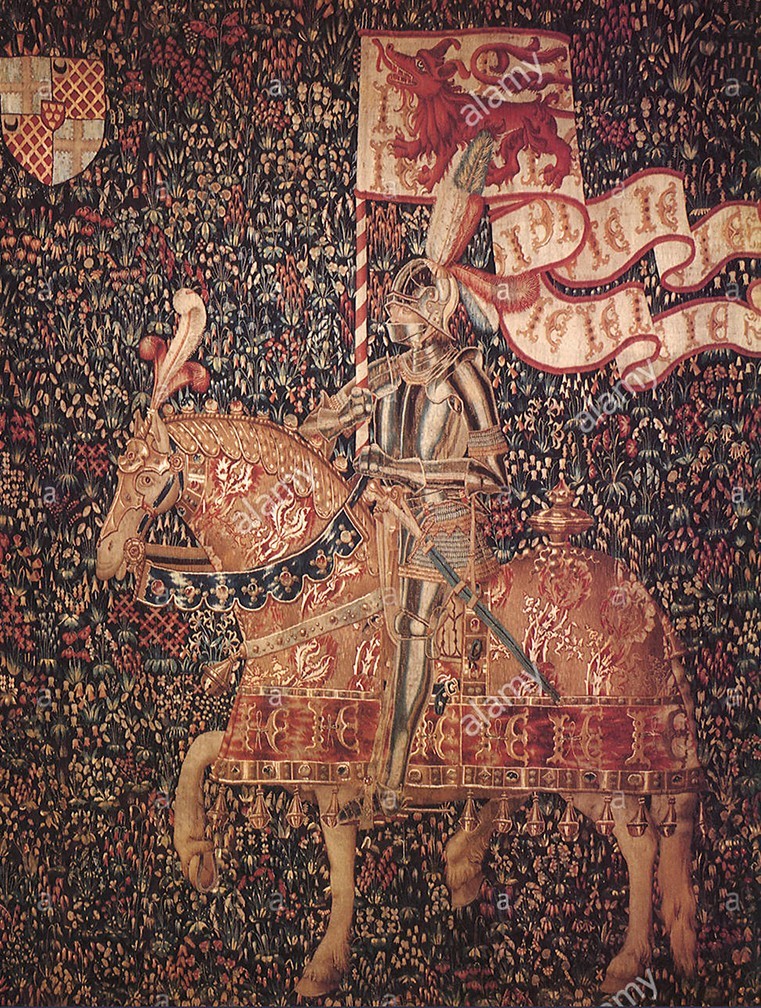
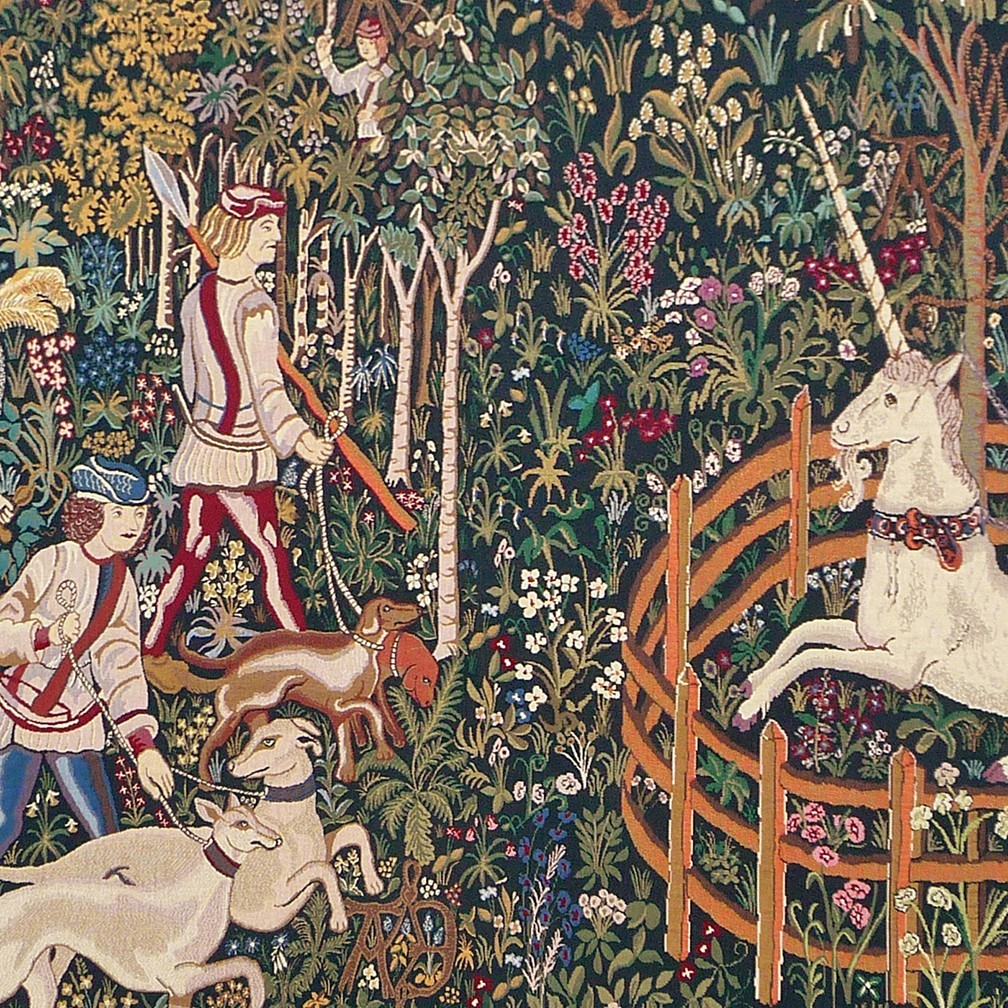
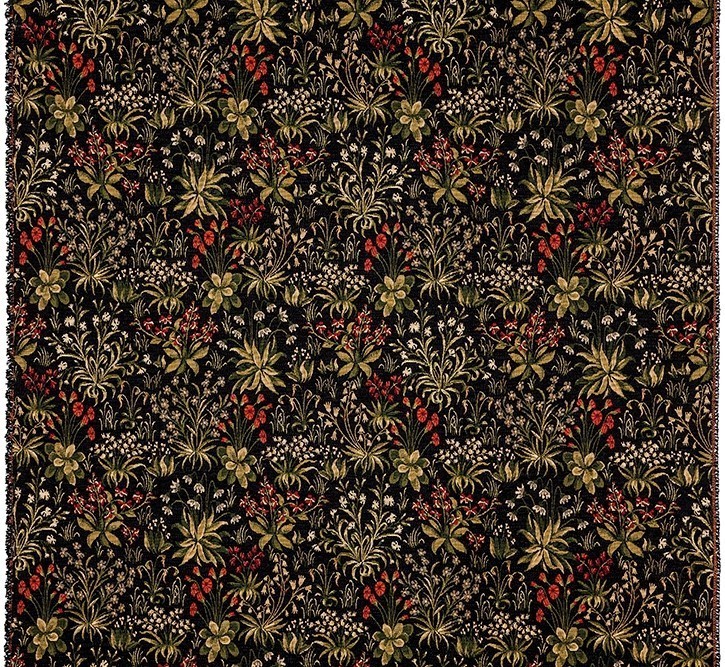
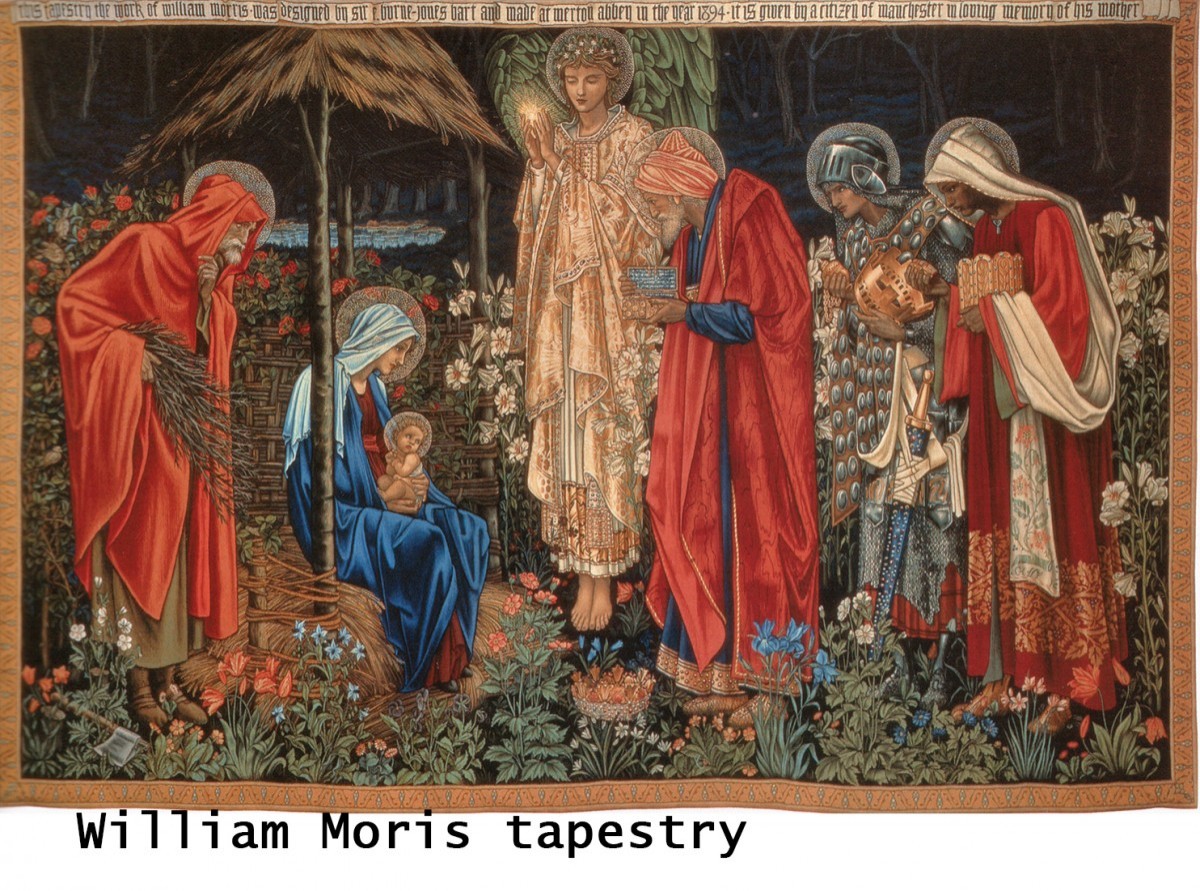
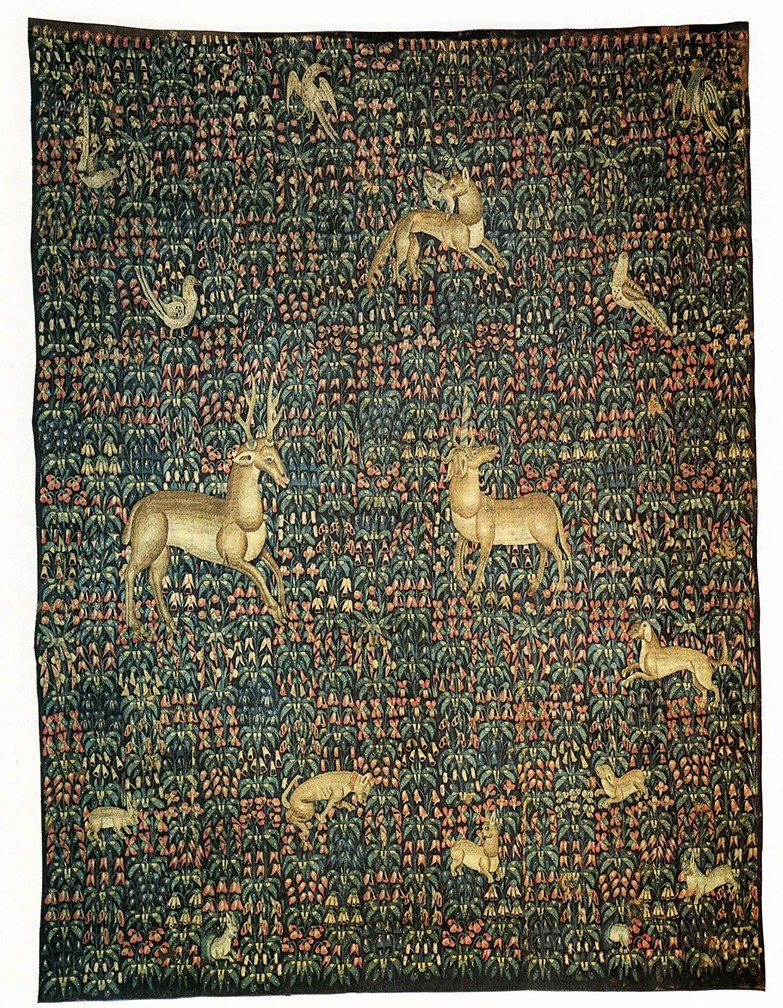
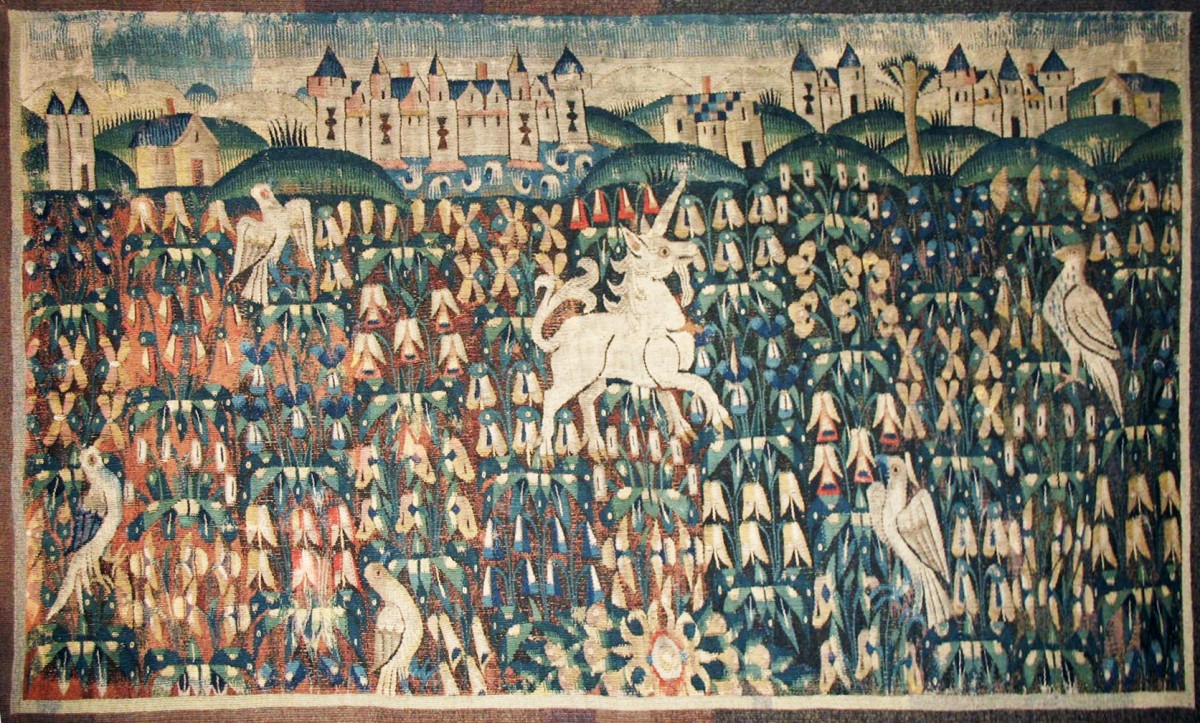
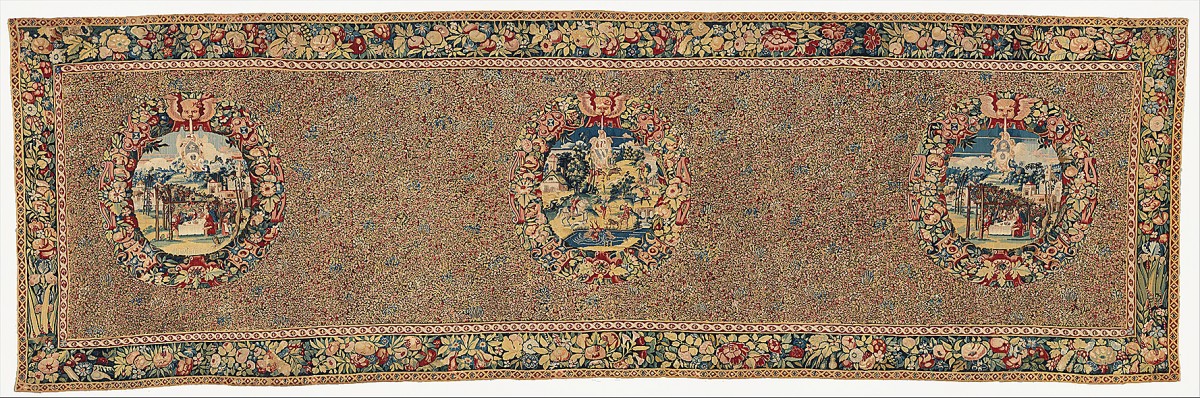
Mille fleurs (“thousand flowers”) tapestries are European textiles, particularly from France and Flanders, characterized by a background filled with numerous small flowers and plants. These tapestries were popular during the late medieval and early Renaissance periods and often include animals or human figures set against the floral background. Millefleur, millefleurs or mille-fleur (French mille-fleurs, literally "thousand flowers") refers to a background style of many different small flowers and plants, usually shown on a green ground, as though growing in grass. It is essentially restricted to European tapestry during the late Middle Ages and early Renaissance, from about 1400 to 1550, but mainly about 1480–1520. The style had a notable revival by Morris & Co in 19th century England, being used on original tapestry designs, as well as illustrations from his Kelmscott Press publications. The millefleur style differs from many other styles of floral decoration, such as the arabesque, in that many different sorts of individual plants are shown, and there is no regular pattern. The plants fill the field without connecting or significantly overlapping. In that it also differs from the plant and floral decoration of Gothic page borders in illuminated manuscripts.