Oriental Rugs Dictionary
Holbein Carpets
Holbein rugs are named after the German Renaissance painter Hans Holbein the Younger, who depicted oriental carpets in his paintings.
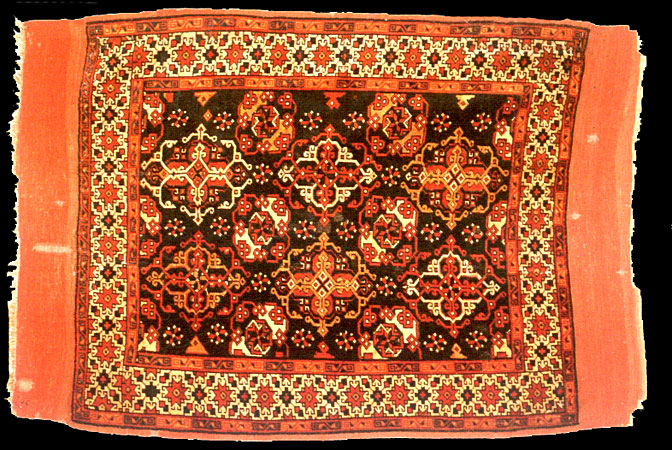
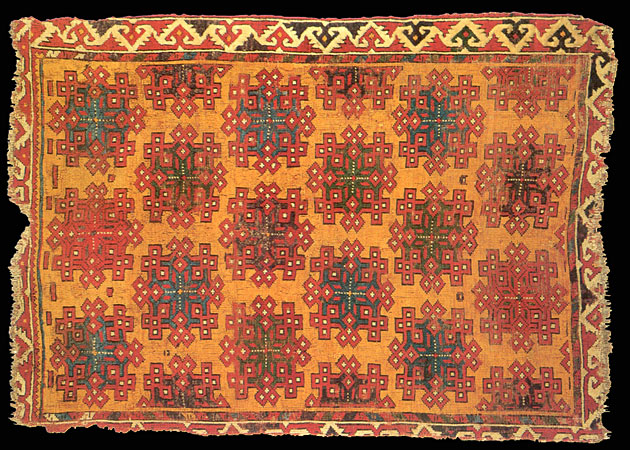
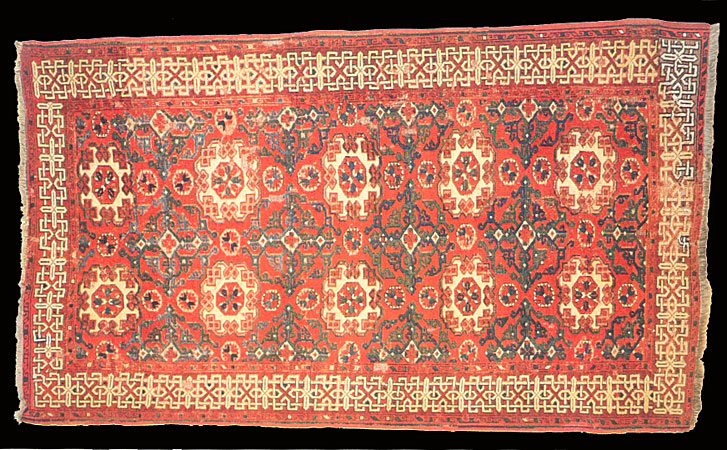
The term refers to a group of Anatolian carpets from the 15th and 16th centuries, characterized by geometric designs, octagonal motifs, and highly structured compositions.
Like other “painter’s carpets,” the name Holbein does not indicate origin but rather classification based on art historical references.
The name of the German painter Hans Holbein (1497-1543) is associated with several different geometric patterns, which, however are generally under two subtitles:
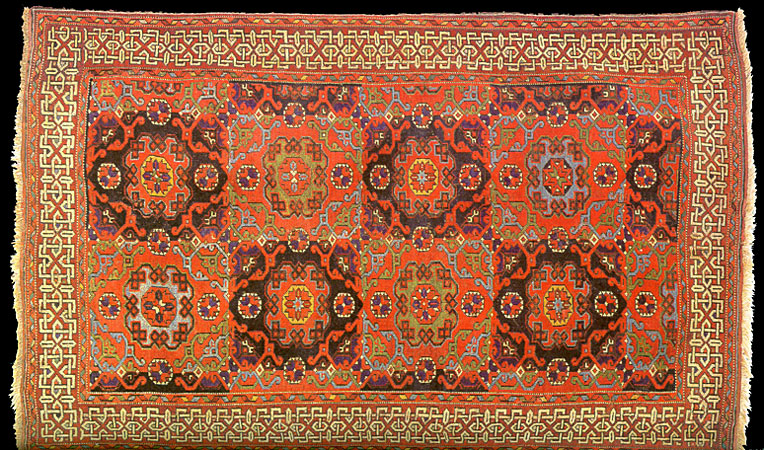
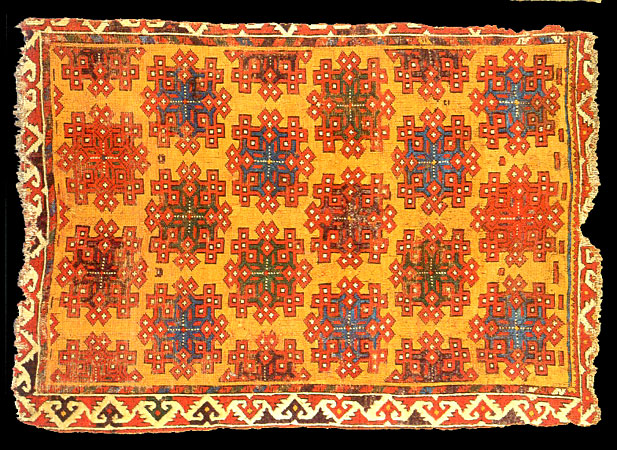
Small Pattern Holbeins present staggered rows of almost circular medallions, containing Octagon bordered by interlace alternating with quadrilorate medallions. The borders often inscribed with Psedo-Kufic writing. The small pattern gul serves as a secondary motif in the large pattern Holbein.
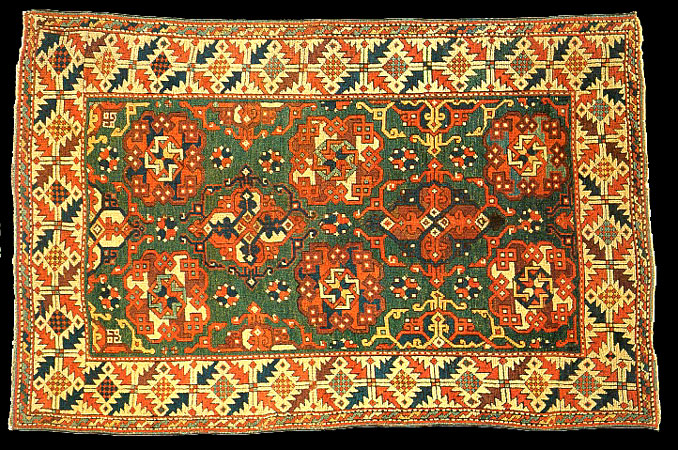
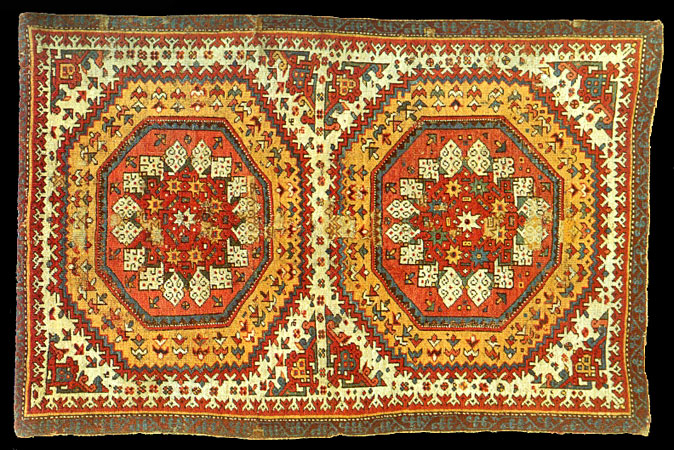
Large Pattern Holbeins usually comprise a field divided into rectangular compartments framing large, variously shaped medallions inscribed, within octagons. Sometimes the spaces between the large motifs are activated with pairs of small medallions. The border may contain Psedo-Kufic script. The Holbein palette is predominantly red blue and yellow.